
Business Goals
ITZKXY enterprise networking and AI infrastructure support
Evaluate NVIDIA SHARP network computing for distributed AI and HPC, including collective communication bottlenecks, deployment fit, validation steps, and limits.

View SolutionTesting and compatibility validation
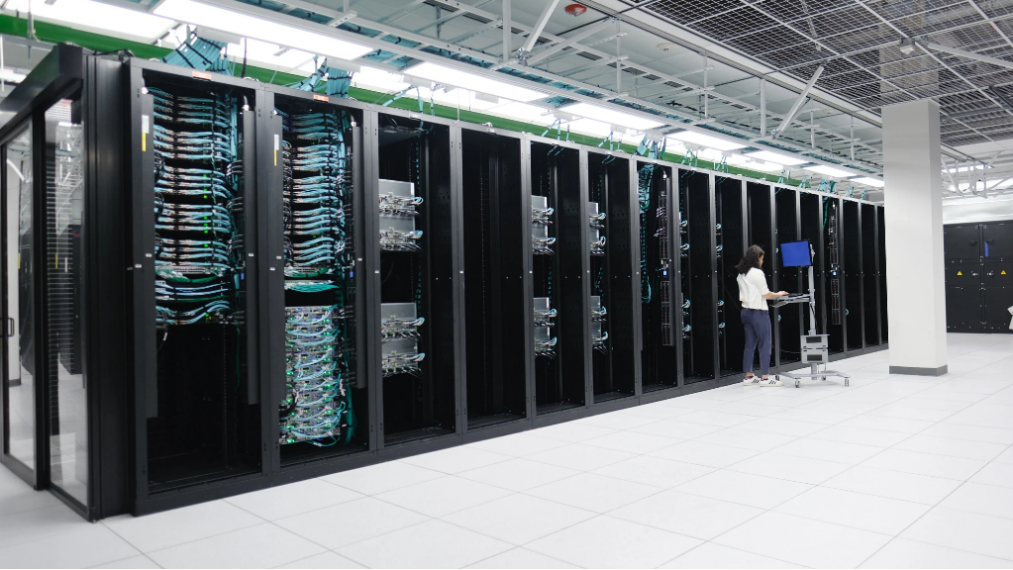
NVIDIA SHARP is a network-computing approach for distributed AI and HPC environments where collective communication is constraining scale-out performance. It moves supported collective operations from servers into the InfiniBand switch fabric, with the aim of reducing data movement, synchronization overhead, and the effect of server-side variation. It should be evaluated as part of an end-to-end architecture that includes compatible InfiniBand infrastructure, communication software, workload behavior, and measured application results.
Distributed training and scientific computing divide work across many CPU- and GPU-based compute engines. Nodes must then exchange model gradients, parameters, or other intermediate data through operations such as all-reduce, reduce, broadcast, gather, and scatter. These exchanges are essential to synchronization and convergence, but their cost can increasingly dominate as a deployment grows.
The architectural question is therefore not simply whether a cluster has high link speed. Teams should identify which collective operations dominate job time, how message sizes vary, whether multiple jobs share the fabric, and whether observed delays come from the network, software stack, compute imbalance, or a combination of these factors.
NVIDIA Scalable Hierarchical Aggregation and Reduction Protocol, or SHARP, is integrated into the switch ASIC and introduces network computing for supported collective communication. With NVIDIA InfiniBand, SHARP can offload operations including all-reduce, reduce, and broadcast from server compute engines to network switches. Reductions such as sums and averages can therefore be performed in the network fabric rather than requiring full data movement among participating GPUs or nodes.
The source describes this shift as reducing transferred data by half while minimizing server jitter. Actual benefit, however, depends on the collective pattern, message size, topology, software version, job concurrency, and the specific hardware and configuration in use. Those conditions must be validated in the intended project environment.
The source outlines several SHARP generations. SHARPv1 was introduced with NVIDIA EDR 100Gb/s switches and focused on small-message reductions for scientific computing. SHARPv2 arrived with NVIDIA HDR 200Gb/s Quantum InfiniBand switches, adding AI workload support and large-message reduction support for one workload at a time. SHARPv3 is described with the NVIDIA Quantum-2 NDR 400G InfiniBand platform and multi-tenant network computing for AI workloads, allowing multiple AI workloads to be supported in parallel relative to the single-workload model described for SHARPv2.
For distributed AI, NCCL is central to the evaluation path. The source states that NCCL began integrating SHARP in 2021 through user-buffer registration, enabling NCCL collectives to use pointers directly and avoiding back-and-forth data copies in that process. Compatibility must still be confirmed against dated NVIDIA documentation and the complete cluster BOM, including switch generation, adapters, cables, firmware, operating system, drivers, NCCL release, and framework integration.
The source cites performance examples from MPI and Azure presentations, as well as a service-provider claim of a 10% to 20% internal AI-workload improvement. These figures should not be used as procurement commitments or projected results. They are workload-specific examples and require independent validation in a project test.
No universal result is established by the source. SHARP is most relevant when supported collective communication materially affects distributed job performance. A workload that is primarily compute-bound, poorly balanced, or limited by factors outside collective communication may see a different outcome. Profile the target workload first.
Verify support in dated official NVIDIA product documentation and a complete SKU/BOM. Review the InfiniBand switch platform, adapters, topology, firmware, drivers, NCCL and framework versions, supported collective operations, tenancy needs, and operational monitoring requirements. Then confirm the result with a representative cluster test.
NVIDIA SHARP provides an architecture path for reducing supported collective-communication overhead by performing aggregation and reduction in the InfiniBand network fabric. It is best assessed through workload profiling, compatibility verification, and production-like benchmarking, rather than through generation-level claims or third-party performance examples alone.
After reviewing NVIDIA SHARP for Distributed AI and HPC Collective Communication, continue with NVIDIA products and networking solutions for related evaluation paths.
Testing and compatibility validation
ITZKXY enterprise networking and AI infrastructure support
Technical service and delivery support
Testing and compatibility validation
Project delivery and optimization support
Testing and compatibility validation
Solution planning and implementation support
Compatibility validation and project risk control
Testing and compatibility validation
Product selection and project support
ITZKXY enterprise networking and AI infrastructure support
Compatibility validation and project risk control
Product selection and project support
Product selection and project support
Testing and compatibility validation

 WeChat
 Inquiry
WeChat
WeChat Inquiry
 Profile
Company Profile
Profile
Company Profile