
Business Goals
ITZKXY enterprise networking and AI infrastructure support
Plan a transition from MLNX_OFED to NVIDIA DOCA-OFED with a unified DOCA-Host deployment model, evaluation checkpoints, and documentation verification steps.
View SolutionTesting and compatibility validation

NVIDIA DOCA-OFED is the migration path described for organizations using MLNX_OFED-based NVIDIA networking stacks. It places host drivers, user-space libraries, and utilities within the NVIDIA DOCA-Host package, while extending the environment toward the NVIDIA DOCA software framework. For infrastructure teams operating BlueField DPUs, SuperNICs, ConnectX NICs, or a mixture of these devices, the practical objective is to validate a unified host software model before relying on it for production AI or accelerated-networking workloads.
The source states that NVIDIA transitioned from the standalone MLNX_OFED driver and tools suite for InfiniBand and Ethernet to DOCA-OFED. It also states that the final lightweight MLNX_EN release would be published and that future functionality would be accessible through DOCA. For plans made after the source publication date of December 18, 2024, teams should treat this as a software lifecycle and platform-direction change rather than a routine driver refresh.
The decision is most relevant where host networking software must support both established adapter deployments and potential adoption of BlueField or SuperNIC hardware. A unified package can reduce variation between server builds, but it also means operational procedures, package repositories, kernel compatibility checks, and rollback processes need to be reassessed.
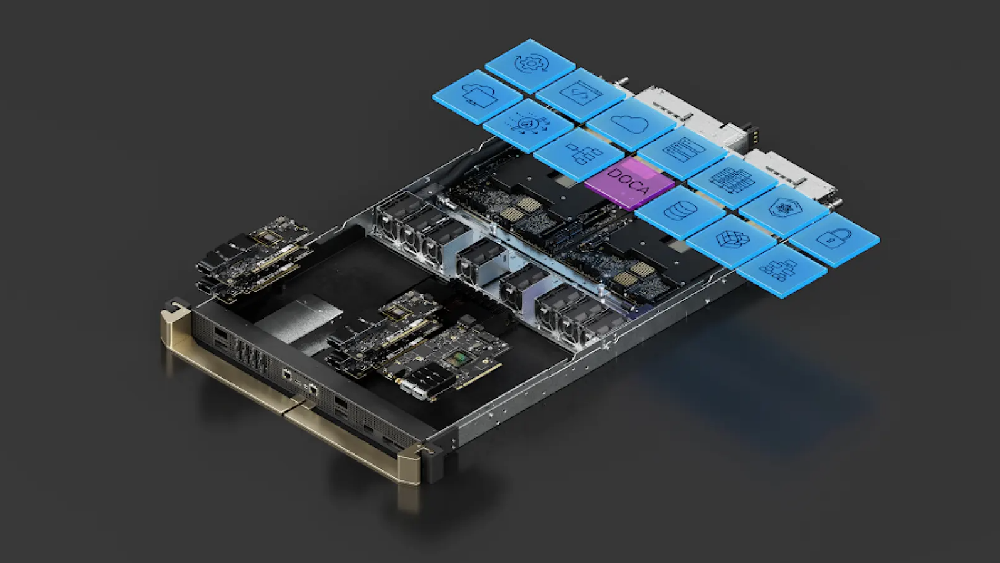
DOCA-OFED is introduced in the NVIDIA DOCA-Host package for host servers. The source describes DOCA-Host as a unified package containing essential components from DOCA and MLNX_OFED, with four installation profiles. It is intended to work with BlueField DPUs, SuperNICs, ConnectX NICs, and deployments that combine these device types.
The source also says DOCA-Host is available through public repositories and supports installation and management with standard Linux package managers. The exact repository, supported Linux distributions, kernel combinations, package versions, and profile contents must be confirmed in dated NVIDIA documentation for the planned release.
The primary benefit described in the source is consolidation: one host package can provide the network stack components needed across supported NVIDIA device categories. This may simplify standardization, but migration does not by itself prove application compatibility or operational readiness. Existing automation may assume standalone MLNX_OFED package names, paths, or management procedures, and those assumptions should be tested.
The source says that from 2025, MLNX_OFED would no longer be provided as a standalone product and would receive only long-term support, while new functionality would be included in DOCA-OFED. It further states that new NVIDIA devices would support DOCA-OFED only. Because support status can vary by device, operating system, and release, buyers and operators should verify these statements against dated official NVIDIA release notes, the hardware support matrix, and the complete software BOM before making procurement or lifecycle decisions.
According to the source, DOCA-OFED is the replacement package and includes the same categories of components: drivers, user-space libraries, and utilities. Confirm the exact component mapping for the selected DOCA-Host release in official package documentation.
The source describes compatibility with BlueField DPUs, SuperNICs, ConnectX NICs, and combinations of those devices. The appropriate installation profile and supported hardware and operating-system combinations still require verification for each target environment.
DOCA-OFED provides the source-described route from a standalone MLNX_OFED model to a DOCA-Host-based network software stack. Start with a hardware and software inventory, validate the chosen profile in a representative environment, and use dated NVIDIA documentation plus project testing to confirm support and production suitability.
After reviewing NVIDIA DOCA-OFED Migration Path for Host Network Stacks, continue with NVIDIA products and networking solutions for related evaluation paths.
Testing and compatibility validation
ITZKXY enterprise networking and AI infrastructure support
Technical service and delivery support
Testing and compatibility validation
Project delivery and optimization support
Testing and compatibility validation
Solution planning and implementation support
Compatibility validation and project risk control
Testing and compatibility validation
Product selection and project support
ITZKXY enterprise networking and AI infrastructure support
Compatibility validation and project risk control
Product selection and project support
Product selection and project support
Testing and compatibility validation

 WeChat
 Inquiry
WeChat
WeChat Inquiry
 Profile
Company Profile
Profile
Company Profile