
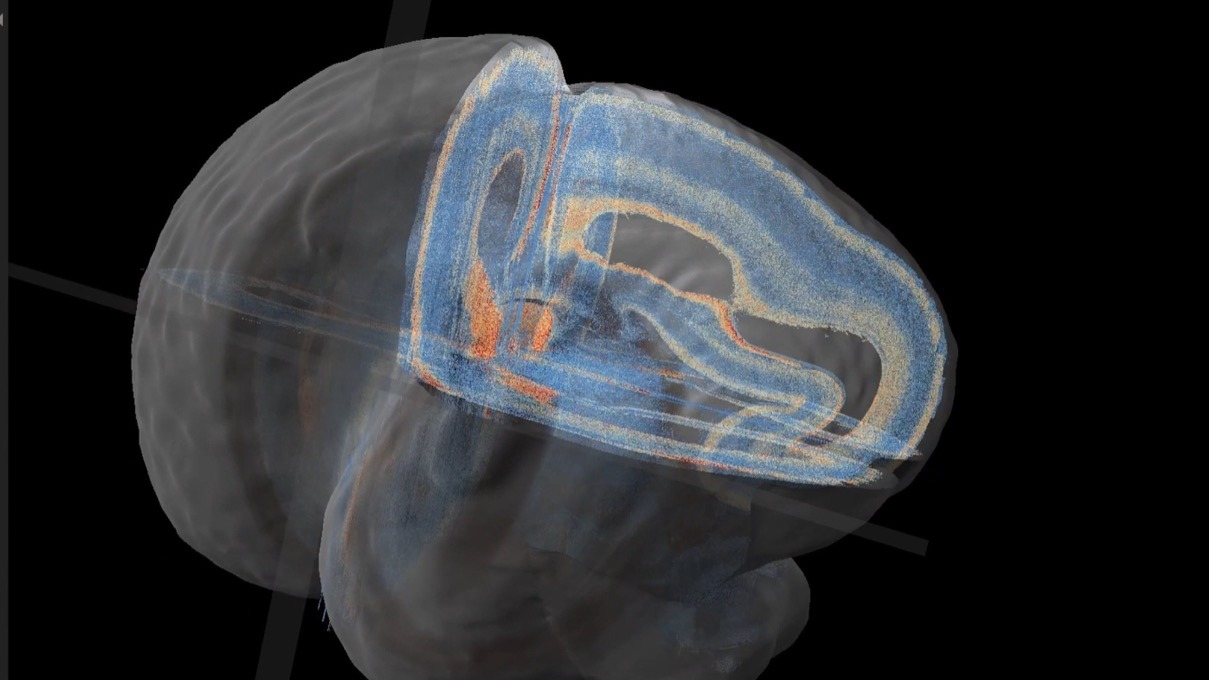
Multimodal AI is becoming a practical research pattern for making neuroscience literature and brain-imaging data easier to explore together. A proof of concept described by IIT Madras Brain Centre combines visual question answering (VQA), large language models (LLMs), domain-tuned retrieval, and image similarity search. It illustrates how research teams may connect questions about brain images with relevant passages from neuroscience publications, while also showing why domain evaluation, input controls, and evidence review remain essential.
What is changing in neuroscience knowledge discovery
Neuroscience teams work with information that is both multimodal and difficult to search as a single corpus: publications contain prose, figures, tables, and images, while research workflows may also involve brain-region images and tissue samples. The IIT Madras Brain Centre framework is designed to link these sources so that a researcher can ask questions about an image, retrieve related research passages, and receive an LLM-generated response.
The workflow has two main stages. First, publicly available neuroscience publications are downloaded, segmented into passages, converted into embeddings using a domain-specific fine-tuned embedding model, and indexed in a vector database. Second, a multimodal retrieval-augmented generation (RAG) workflow filters user input, retrieves passages through a combination of semantic and keyword similarity, reranks the results, and sends the top two passages to a language model for answer generation.
Why multimodal retrieval matters
Text-only retrieval can help locate relevant literature, but it does not directly address questions prompted by an image. In the described proof of concept, users can submit an image of a brain region and ask questions about what is shown. The framework uses VQA models such as Llava-Med for this interaction. It also supports image-to-image retrieval based on an input image or text query, although the source states that this part of the workflow remains under development and needs further optimization.
The examples demonstrate the intended use: identifying the cerebellum from an input image, answering whether an image depicts the frontal cortex, and finding visually similar stained tissue samples. These examples demonstrate capability within the proof of concept; they do not establish clinical validity, diagnostic accuracy, or suitability for use in patient care.
Technology choices and reported results
The source describes NVIDIA technologies used across the pipeline. Synthetic data for embedding-model fine-tuning was generated with an LLM, with Mixtral 8x 7B NVIDIA NIM microservices used to support inference. After fine-tuning, the reported top-two retrieval accuracy increased by 15.25%. The use of NVIDIA NeMo Retriever and the nv-rerank-qa-mistral-4b_v2 NIM microservice for reranking reportedly raised top-two retrieval accuracy by a further 15.27%.
For input filtering, the researchers used NVIDIA NeMo Guardrails with Llama Guard 2 8B and neuroscience-specific prompts. On the cited testing approach, the customized prompt blocked 68% of toxic content, compared with 38% for the default prompt, and accepted 98% of neuroscience-specific questions in a custom dataset. The reported figures are specific to the described datasets, prompts, models, and test setup. They should not be treated as general performance guarantees.
The source also reports that Llama 3.1 70B NIM running on an NVIDIA DGX A100 server delivered inference four times faster than custom-developed inference code in this environment. Teams considering a similar architecture should verify model versions, hardware configuration, concurrency, latency targets, data volume, and the baseline implementation in their own project tests.
Decision impact for research organizations
This approach is most relevant when a team needs to search specialized literature and interpret visual research material within one workflow. A practical evaluation should begin with a limited, governed corpus and representative research questions. Teams should measure retrieval quality before measuring answer fluency, since generated answers depend on the passages retrieved. They should also assess image quality, metadata completeness, false matches in image retrieval, unsafe or irrelevant input handling, and the ability for researchers to inspect supporting passages.
NVIDIA’s multimodal PDF data extraction AI blueprint is presented as a possible extension for extracting text, figures, charts, tables, and other visual material from PDF publications before connecting the results to a retrieval pipeline. Before deployment, organizations need to review the dated official documentation, complete software and infrastructure requirements, deployment materials, and applicable data-governance obligations.
FAQ
Does this framework provide validated medical or diagnostic answers?
No such validation is established by the source. The work is presented as a neuroscience research proof of concept. Outputs should be reviewed against the retrieved evidence and qualified expert judgment, and any clinical use would require separate validation and governance.
What should be tested before adopting multimodal RAG for neuroscience?
Test domain retrieval accuracy, reranking quality, answer grounding, image-query performance, input filtering, concurrency, and latency using representative publications and research tasks. Confirm supported model versions, deployment dependencies, and hardware requirements in dated official product documentation and the complete project BOM.
Conclusion
The IIT Madras Brain Centre proof of concept shows a direction for neuroscience research systems: combine literature retrieval, VQA, and image similarity workflows rather than treating text and images as separate resources. Its reported results support further evaluation, but they are environment-specific and require independent verification before operational use.
After reviewing Multimodal RAG and VQA for Neuroscience Research, continue with related solutions for related evaluation paths.

 WeChat
 Profile