
Business Goals
ITZKXY enterprise networking and AI infrastructure support
A practical evaluation path for a multi-framework AI training and inference appliance, including local deployment, API integration, security boundaries, and validation steps.

View SolutionTesting and compatibility validation
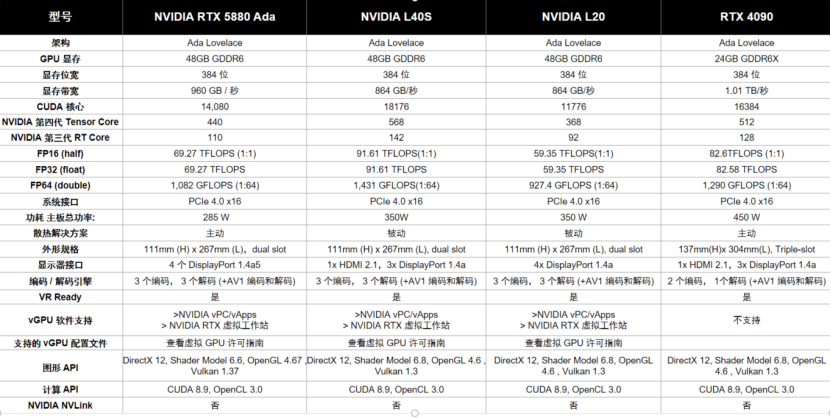
An AI training and inference appliance may suit organizations that need to evaluate local model deployment across multiple frameworks while keeping sensitive workloads within an internal environment. The supplied source describes support for loading TensorFlow, PyTorch, and MXNet models, local optimization for DeepSeek-V3, API documentation, and configuration options involving NVIDIA RTX 5880. Before procurement or production rollout, confirm the exact hardware configuration, supported model versions, framework compatibility, performance limits, and security controls in dated official documentation and the complete SKU/BOM.
Organizations can encounter friction when existing AI assets use different frameworks or when inference, fine-tuning, integration, and data-governance requirements are assessed separately. The source positions a training and inference appliance as a consolidated deployment option for TensorFlow, PyTorch, and MXNet models, with local operation intended to keep data inside the enterprise network.
This approach can be evaluated for use cases involving sensitive business information, such as transaction records or patient files, but local installation alone does not establish legal or regulatory compliance. Teams must verify access controls, encryption, audit logging, data retention, model governance, and the applicable requirements for their jurisdiction and industry.
The source references NVIDIA RTX 5880 and comparisons with L40S and 4090 hardware, but it does not provide the underlying test methodology, system configuration, model settings, or reproducible results. It also references DeepSeek inference requirements and distributed training concepts without defining the exact cluster architecture.
Procurement should therefore start with a complete bill of materials: GPU count and memory, CPU, system memory, storage capacity and throughput, networking, power, cooling, operating system, driver versions, and interconnect design. Confirm whether the intended configuration supports multi-GPU operation, distributed training, or the specific model size under consideration. Capacity claims for large local models require validation against the actual model, quantization method, sequence length, concurrency, and reliability target.
The source states that local operation can support internal-network data handling and describes a multi-framework deployment proposition. It does not substantiate claims of zero-code adaptation, a three-day customer deployment, specific utilization levels, public-cloud cost reductions, regulatory conformity, or particular performance comparisons. These claims should not be used as planning assumptions without independently reviewable evidence.
No. The source states that these frameworks can be loaded, but compatibility depends on the model version, custom code, operators, runtime dependencies, GPU software stack, and serving method. Validate each target model in a proof of concept using the intended production configuration.
No. Local deployment can change where data is processed, but compliance depends on the full system design and operating controls. Verify data flows, administrator access, encryption, audit evidence, retention, incident procedures, and applicable legal requirements with the relevant stakeholders.
A multi-framework training and inference appliance can provide a structured path for assessing local AI deployment and API-based application integration. The appropriate decision is based on a documented model inventory, a complete hardware and software configuration, controlled pilot measurements, and security review rather than unverified performance, cost, or compliance claims.
After reviewing Multi-Framework AI Appliance Path for Local DeepSeek Deployment, continue with related solutions for related evaluation paths.
Testing and compatibility validation
ITZKXY enterprise networking and AI infrastructure support
Technical service and delivery support
Testing and compatibility validation
Project delivery and optimization support
Testing and compatibility validation
Solution planning and implementation support
Compatibility validation and project risk control
Testing and compatibility validation
Product selection and project support
ITZKXY enterprise networking and AI infrastructure support
Compatibility validation and project risk control
Product selection and project support
Product selection and project support
Testing and compatibility validation

 WeChat
 Inquiry
WeChat
WeChat Inquiry
 Profile
Company Profile
Profile
Company Profile