
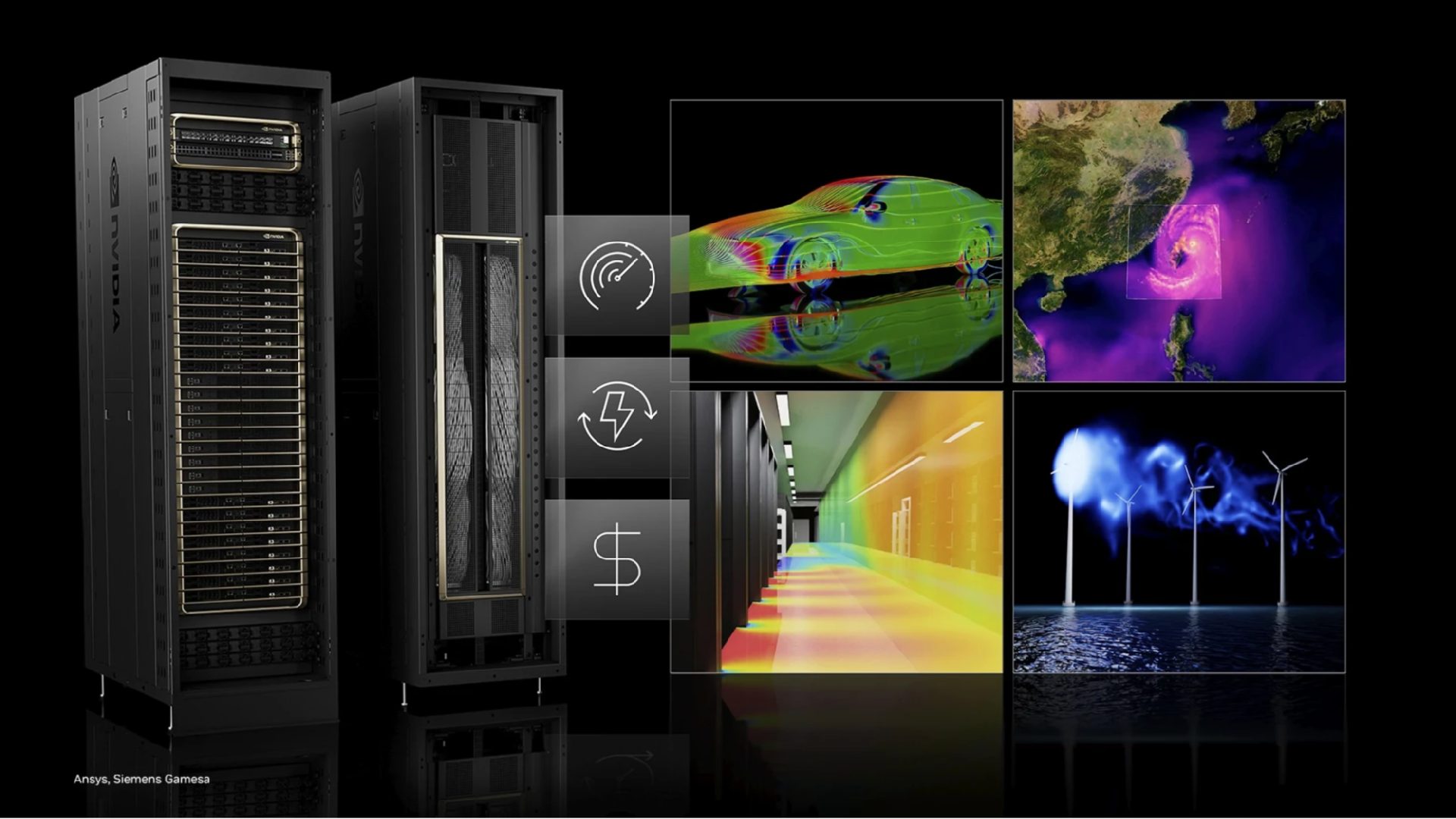
AI factory planning centers on one practical question: can the data center support growing AI training and inference workloads with an architecture that is operationally manageable, energy-conscious, and scalable? The source record describes NVIDIA’s experience designing, building, and operating multi-megawatt NVIDIA DGX SuperPOD data centers since 2016, and frames the transition from conventional data centers to AI-oriented infrastructure as a response to rising computational demand from AI workflows.
Why AI workloads change data center design
Traditional data center planning often focuses on general-purpose CPU capacity, storage, and network connectivity. AI workloads introduce different constraints. Model training and inference can depend on large-scale parallel processing, high-throughput interconnects, coordinated power delivery, and cooling capacity that match the compute design.
The source identifies GPUs as a central element of this transition. It states that GPUs have enabled parallel processing in data centers since 2012 and have reduced time required for intensive computing tasks. It also cites performance-per-watt and performance-per-dollar improvements over traditional CPU-based systems. These figures should be treated as source-stated context rather than as project-specific planning values; buyers should validate expected performance against their selected models, software stack, workload profile, and facility design.
Capabilities an AI factory architecture must coordinate
An AI factory is not defined by accelerators alone. The source describes platform-wide efficiency work spanning GPUs, CPUs, interconnects, power, and cooling. For an enterprise evaluation, these elements should be considered together rather than purchased as isolated upgrades.
- Accelerated compute: Determine whether the proposed GPU configuration has sufficient memory, processing capability, and scale for the intended training or inference workload.
- High-speed interconnect: Assess network bandwidth, latency, topology, and loss-handling behavior against the communication demands of distributed workloads.
- Power and cooling: Confirm that rack power density, power distribution, cooling method, and facility capacity can support the planned deployment.
- Operations: Define how capacity will be monitored, scheduled, maintained, and expanded as AI usage grows.
Suitable planning scenarios
This approach is most relevant when an organization is moving beyond small AI experiments and needs repeatable infrastructure for larger training, inference, or mixed workloads. It can also apply when an existing data center must be assessed for higher-density computing, or when infrastructure teams need to coordinate compute, networking, power, and cooling decisions under one deployment plan.
The source notes major improvements in energy used to train and infer large language models, including a comparison between 40 GWh and 3 GWh. It does not specify the model, hardware configuration, measurement method, or operating conditions behind that comparison. It should therefore not be used to estimate a specific project’s energy consumption.
Evaluation path before deployment
- Classify target workloads by model size, training frequency, inference volume, data movement, and response-time requirements.
- Build a complete SKU and bill of materials covering compute, networking, storage, power, cooling, racks, software, and support dependencies.
- Run a representative proof of concept that measures throughput, job completion behavior, network behavior, power draw, thermal conditions, and operational visibility.
- Compare measured results with facility limits and expansion plans before committing to production scale.
- Review dated official product documentation for supported configurations, compatibility requirements, and deployment guidance.
FAQ
Does an AI factory simply mean adding GPUs to an existing data center?
No. The source presents AI infrastructure as a coordinated platform involving accelerated computing, CPUs, interconnects, power, and cooling. Whether an existing site can support such a deployment must be verified through a facility assessment and a complete architecture review.
Can the efficiency figures in the source be used for capacity or cost planning?
Not on their own. The source provides high-level comparisons, but does not establish workload definitions, test conditions, component configurations, or local energy costs. Capacity, power, and financial planning should use project tests and dated official documentation for the exact proposed configuration.
Conclusion
Moving toward an AI factory requires an infrastructure decision that connects compute performance with networking, facility readiness, and operational control. The source supports the case for evaluating these layers as one system, while final sizing and efficiency claims must be verified for the specific workload, SKU/BOM, and deployment environment.
After reviewing From Data Centers to AI Factories: Infrastructure Evaluation Guide, continue with buyer selection questions for related evaluation paths.

 WeChat
 Profile