
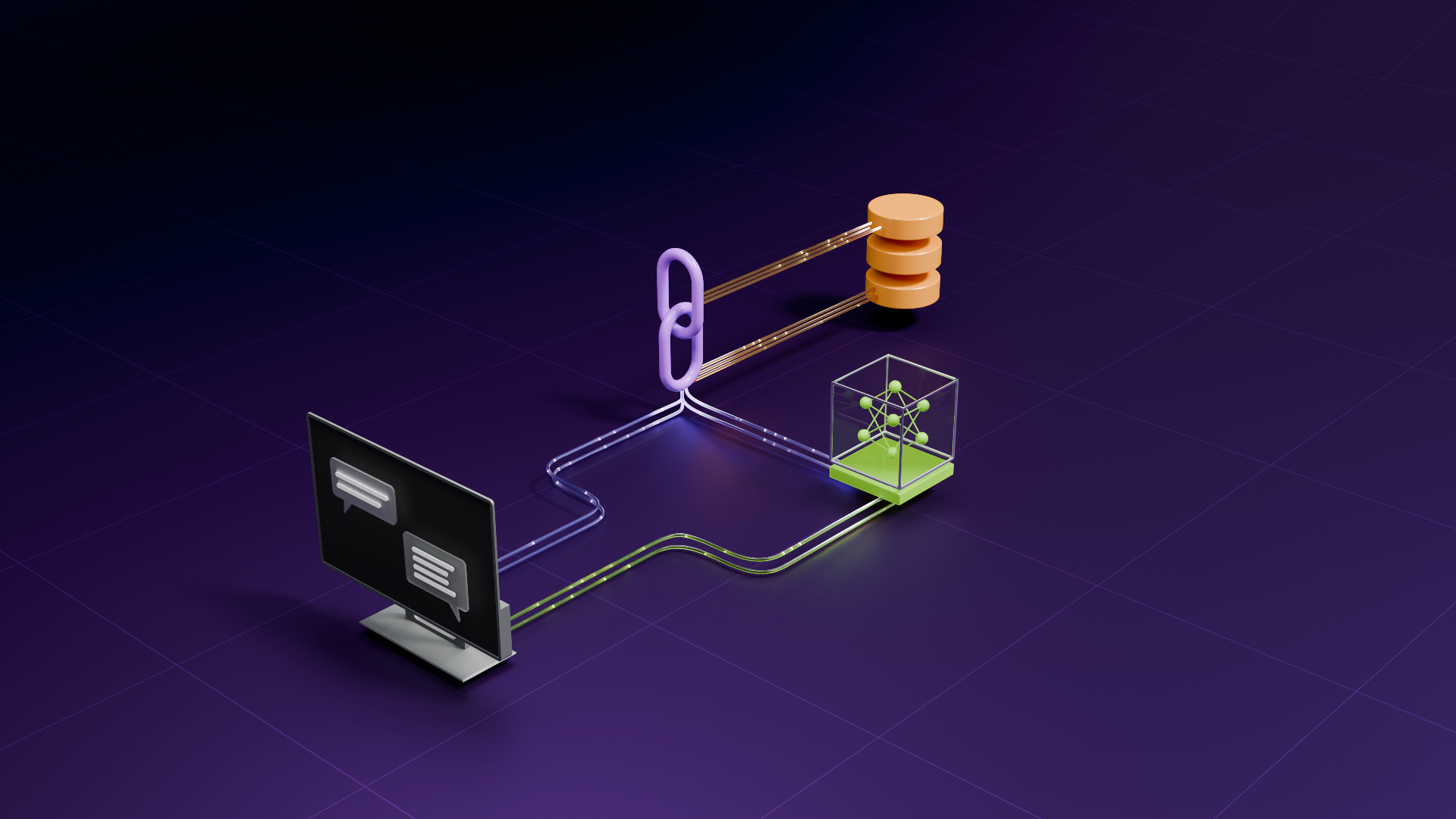
An AI sales assistant is most useful when it can retrieve evidence from fragmented knowledge sources, route structured questions to the right systems, and show users what is happening while longer tasks run. NVIDIA’s described implementation combines large language models (LLMs), retrieval-augmented generation (RAG), CRM-oriented Text2SQL, and an event-driven chat workflow to address those needs. The approach is a reference architecture rather than a universal deployment template: data permissions, model selection, retrieval quality, and system integration must be validated for each organization.
The sales-information problem the solution addresses
Sales teams often need to consult internal documents, media repositories, public web content, and CRM records before answering a prospect or preparing a report. Searching those systems separately can slow research and make it difficult to form a traceable response. NVIDIA describes an assistant designed to bring proprietary and external information into one conversational interface, supporting questions about products, CRM updates, customer-specific scenarios, document summaries, editing, and proofreading.
The important design choice is not simply adding a chat interface. The system routes questions according to the data required. Document-based questions can use RAG, while questions about structured sales information can follow a Text2SQL path. This distinction matters because a generated answer based on retrieved documents is evaluated differently from a query against CRM tables.
Architecture path: ingestion, retrieval, routing, and response
NVIDIA describes four connected capabilities:
- Document preparation: PDFs, presentations, audio, video, and multilingual material require normalization before retrieval. The workflow described uses NVIDIA Multimodal PDF Ingestion Blueprint for PDFs, NVIDIA Parakeet NIM for audio transcription, and Llama 3.1 70B for editing and translation. Output is standardized as Markdown and stored in Milvus.
- Wide RAG: Answers combine vector retrieval from Milvus, web search limited to NVIDIA’s website, and Perplexity API results. This broadens coverage, but it also increases the need to distinguish internal material, public pages, and third-party results.
- Structured-data access: For CRM reporting, the system uses a Text2SQL approach that selects relevant tables and generates SQL queries rather than relying only on retrieved prose.
- Event-driven orchestration: LlamaIndex workflows manage local state and route requests. Chainlit context management provides progress indicators in the chat interface, helping users see that a retrieval, SQL, or generation step is still in progress.
Implementation checkpoints for an enterprise deployment
- Inventory the information sources and define which documents, recordings, CRM tables, and public domains are eligible for use.
- Build an ingestion pipeline that handles formatting inconsistencies, translation needs, transcription quality, and product-name normalization before indexing content.
- Separate document retrieval from structured-data querying. Test routing with representative sales questions, including ambiguous requests that could require both paths.
- Preserve source traceability. NVIDIA’s workflow replaces lengthy citations with compact keys during generation, then restores full citation details in postprocessing.
- Design the interface for waiting states. NVIDIA set maximum times of 8 seconds for web retrieval and parsing, and 15 seconds for Perplexity API results, while presenting early source summaries and progress feedback.
- Evaluate outputs against approved source material, expected CRM results, and sales-user review. Project testing should confirm permissions, SQL safety, citation behavior, and answer suitability before production use.
Tradeoffs and operating limits
Fast answers and well-supported answers can conflict. Wider retrieval may improve coverage, but it can also introduce irrelevant or outdated material. NVIDIA notes that maintaining knowledge freshness is resource-intensive; its described approach uses a one-year lookback period while exploring ways to identify and prune stale content. That policy should not be treated as suitable for every sales organization, especially where product, pricing, contract, or regulatory information changes more frequently.
Integration complexity is another constraint. Files in PDF, slide, audio, and video formats may each need tailored extraction and quality controls. Long-running operations, including SQL queries, may require partial distribution with message queues to preserve interactive behavior. The source also identifies future work in real-time updates, additional system and format integrations, security, multimedia handling, and personalization. These remain improvement areas described in the source, not established outcomes.
FAQ
When should an AI sales assistant use RAG instead of Text2SQL?
RAG is appropriate for questions answered by unstructured material such as sales documents, product content, and transcripts. Text2SQL is better suited to questions requiring values or summaries from structured CRM data. A production system should test query routing and retain controls over which tables and fields may be queried.
How can users assess whether an answer is reliable?
Users should be able to inspect the cited sources and understand whether the answer came from internal documents, permitted public web content, or CRM data. Retrieval relevance, citation restoration, data recency, access controls, and generated SQL must be verified in the organization’s own environment and against dated authoritative records.
Conclusion
NVIDIA’s AI sales assistant example shows a practical solution pattern: normalize diverse sales content, retrieve evidence across approved sources, route CRM requests to structured queries, and expose workflow progress to users. Its value depends on disciplined ingestion, source governance, transparent citations, and evaluation with real sales workflows rather than on the chat model alone.
After reviewing Lessons from NVIDIA’s AI Sales Assistant Architecture, continue with NVIDIA products and networking solutions for related evaluation paths.

 WeChat
 Profile