
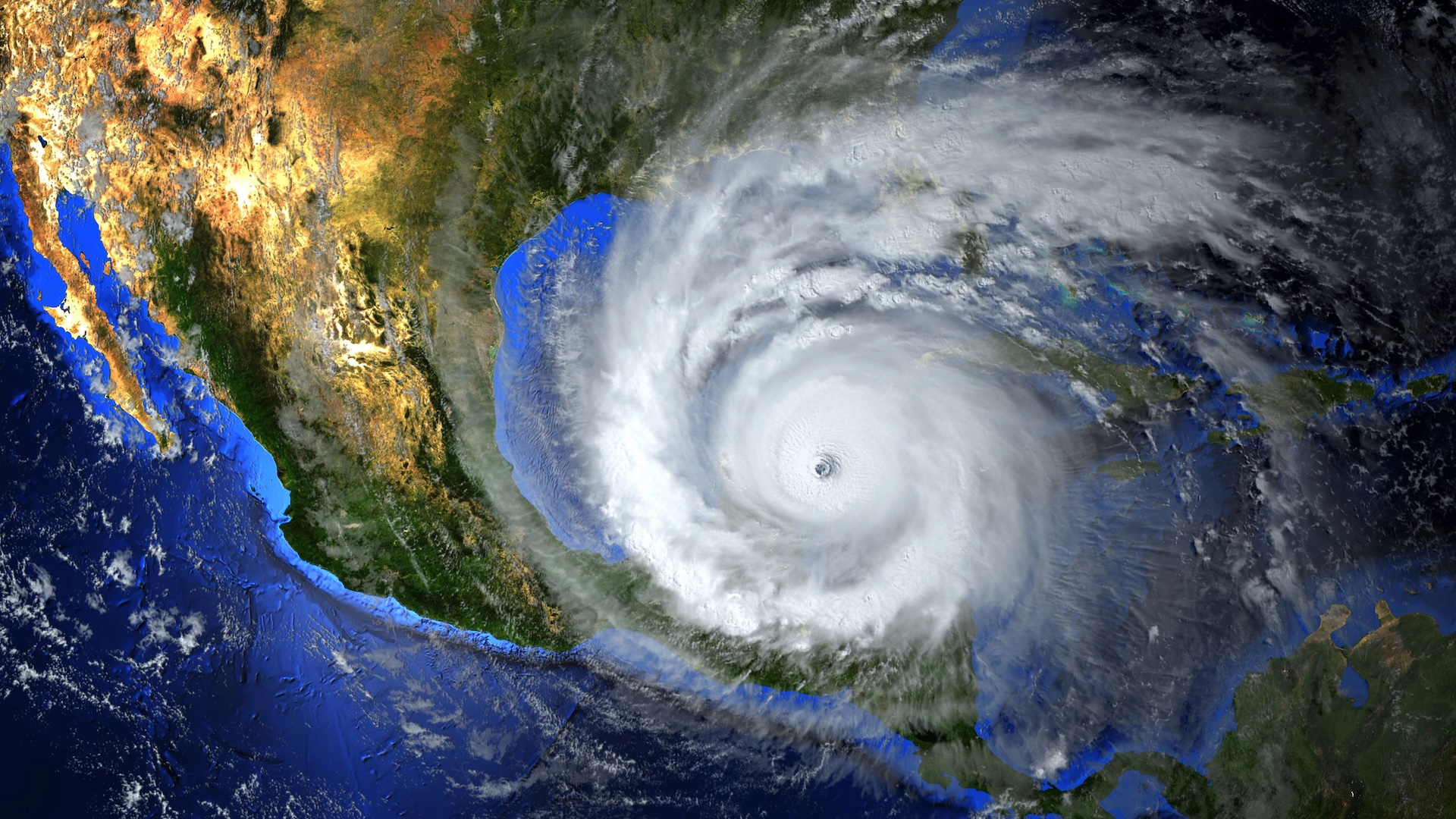
For teams evaluating AI-assisted Earth-system forecasting, the model presented by University of Washington atmospheric sciences professor Dale Durran at NVIDIA GTC 2024 illustrates a path to combine atmospheric and ocean data, reduce reliance on traditional parameterization, and support long-range weather and climate prediction research. The source describes an approach rather than a packaged forecasting product, so performance, deployment requirements, and suitability for a specific operational forecast workflow must be verified through the dated presentation materials and project testing.
The forecasting problem addressed
Global weather and climate models must represent processes across a spherical planet while accounting for interactions between the atmosphere and the ocean. The presentation describes deep learning techniques intended to reduce dependence on conventional parameterizations and the approximations that can accompany them. Its stated objective is to create accurate long-term Earth-system predictions with minimal drift.
This matters particularly for sub-seasonal and seasonal forecasting, where accumulated model error can reduce the value of a prediction over time. A coupled approach is presented as a way to model atmospheric and ocean processes together, with the aim of improving long-term forecast stability and reliability.
Capabilities described in the presentation
- Atmosphere-ocean coupling: The model combines atmospheric and oceanic processes for long-range prediction.
- Data-driven modeling: The approach seeks to bypass parts of traditional parameterization in favor of learned representations.
- HEALPix grid representation: A grid borrowed from astronomy is used to represent Earth’s spherical geometry and provide equal-area coverage intended to avoid spatial distortion in global forecasts.
- GPU-based training: The source states that NVIDIA A100 Tensor Core GPUs were used for rapid training and that the CNN architecture was optimized for NVIDIA GPUs.
- Satellite-data integration: The presentation identifies satellite inputs, including outgoing longwave radiation, as data that can improve prediction of dynamic events.
- Simulation and visualization tools: NVIDIA Modulus is cited for integrating machine learning into simulation, while NVIDIA Omniverse is cited for high-fidelity visualization.
Where this approach may fit
The described model is relevant to research and engineering teams building global Earth-system models for sub-seasonal or seasonal prediction. It may also be useful where a project needs joint treatment of ocean and atmospheric information, a spherical global grid, or visualization to inspect model behavior and results.
Adoption should not be based on the presentation alone. The source does not specify training-data scope, forecast variables, temporal resolution, inference latency, software versions, model size, accuracy metrics, or comparisons with numerical weather prediction systems. Organizations should therefore distinguish between a research architecture and an operational forecasting service.
Evaluation path and evidence boundaries
- Define the target decision horizon, geographic coverage, forecast variables, and acceptable error measures.
- Confirm whether the available atmospheric, oceanic, and satellite datasets are appropriate for coupled training and validation.
- Review the dated NVIDIA GTC 2024 session materials to establish the model design, software dependencies, and implementation details actually disclosed.
- Test the HEALPix-based representation against the project’s required global or regional outputs, including downstream mapping and data-consumption workflows.
- Run held-out and long-horizon experiments to measure drift, reliability, computational cost, and operational reproducibility in the intended environment.
The source attributes improved accuracy, reliable long-term prediction, and reduced drift to the presented approach, but it does not provide numerical results or test methodology. Those claims should be treated as presentation-level statements until independently validated for the intended data and forecast task.
Frequently asked questions
Is this an NVIDIA forecasting product?
No packaged product is identified in the source. NVIDIA A100 Tensor Core GPUs, NVIDIA Modulus, and NVIDIA Omniverse are named as components used in the work described at GTC 2024. A buyer should verify licensing, supported configurations, and integration requirements in dated official documentation.
Does the source prove that the model will improve every weather forecast?
No. The source describes a model intended to improve accuracy and long-term reliability, but it provides no benchmark values, baseline definition, region-specific results, or production validation. Performance must be evaluated using the organization’s own forecast targets and test data.
Conclusion
This GTC 2024 presentation provides a research-oriented blueprint for deep learning Earth-system forecasting: couple atmosphere and ocean processes, use HEALPix for spherical global representation, train CNN architectures on NVIDIA GPUs, integrate satellite data, and visualize results with NVIDIA tools. Its value for an operational program depends on documented implementation details and project-specific validation rather than on the presentation summary alone.
After reviewing Deep Learning for Coupled Weather and Climate Forecasting, continue with buyer selection questions for related evaluation paths.

 WeChat
 Profile