
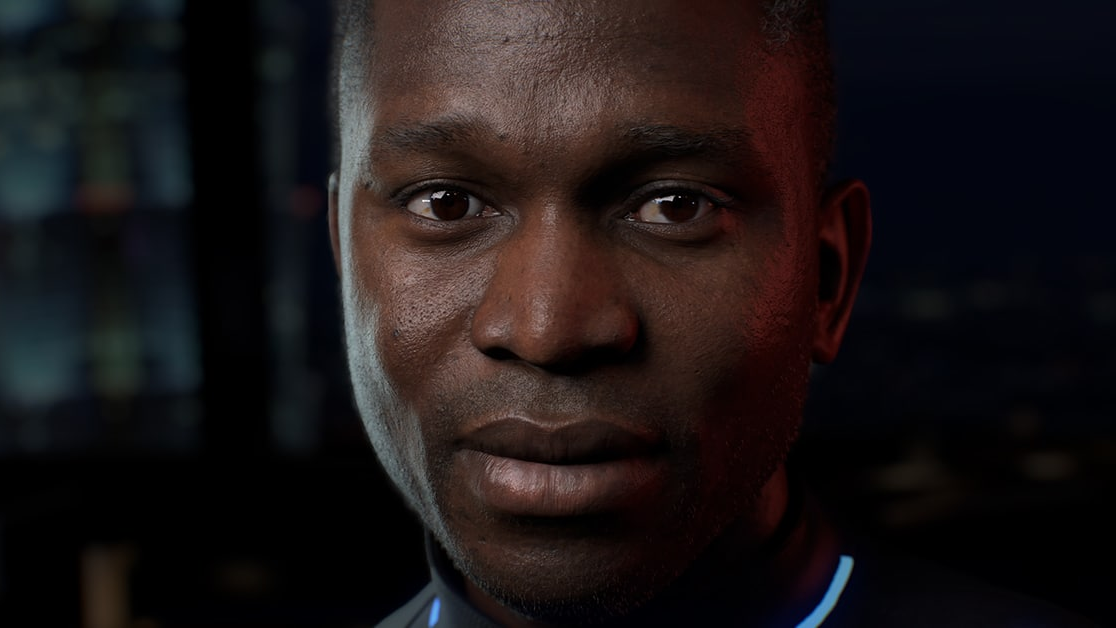
For teams building agents, assistants, or virtual avatars on NVIDIA RTX AI PCs, the source describes a device-side workflow built around small language models, visual understanding, speech, retrieval, and facial animation. The stated goal is to reduce the integration burden of combining these components while supporting responsive digital-human interactions. Model selection, hardware fit, licensing, supported GPUs, and production readiness still need validation against dated NVIDIA documentation and a project-specific test.
Scenario: a responsive digital human on a PC
A digital human may need to accept speech, interpret text or visual inputs, retrieve information, generate a response, and animate a face in time with audio. The source identifies this orchestration as challenging because each stage can use a different model, runtime, and hardware optimization path. The complexity increases when an application supports multiple inputs and outputs or autonomous-agent-style workflows.
NVIDIA ACE is presented in the source as a collection of digital-human technologies for agents, assistants, and avatars. For an RTX AI PC deployment, the relevant design question is not simply whether a model can run locally: it is whether the complete path from input to response and animation meets the application’s quality and responsiveness requirements.
Architecture path described in the source
- Visual and language reasoning: NVIDIA Nemovision-4B-Instruct is described as a small multimodal model that can interpret visual images from the real world and the Windows desktop, then produce relevant responses. The source says it uses NVIDIA VILA and NVIDIA NeMo frameworks and recipes for distillation, pruning, and quantization.
- Long-context processing: The Mistral-NeMo-Minitron-128k-Instruct family is described in 8B, 4B, and 2B parameter variants. These models are positioned for users balancing speed, memory use, and accuracy on NVIDIA RTX AI PCs, with the intended benefit of handling large inputs in one pass and reducing data splitting and recombination.
- Speech and animation: The source lists NVIDIA Riva automatic speech recognition for speech-to-text and Audio2Face-3D NIM for real-time audio-driven lip synchronization and facial animation. Audio2Face-3D NIM is described as a downloadable optimized container with additional configuration options and an inference model for the public digital human “James.”
- Workflow integration: Device-side plugins and examples are described as being based on the NVIDIA In-Game Inference SDK. The source says the SDK can download models and dependencies automatically, abstract inference-library and hardware details, and support hybrid AI that switches between PC-based and cloud-based AI.
Implementation checkpoints
- Define the required inputs: text only, speech, visual images, Windows desktop content, or a combination. Do not adopt a multimodal component unless the application has a defined visual-input use case.
- Measure the full interaction path rather than isolated model inference. Include transcription, retrieval, generation, speech output where applicable, and facial animation in the test plan.
- Choose among the 2B, 4B, and 8B long-context variants only after testing memory use, response quality, and response time on the target RTX AI PC configuration.
- Test local-only and hybrid PC/cloud behavior separately. A workflow that can switch execution locations requires explicit handling for data boundaries, failure behavior, and user experience.
- Validate each SDK plugin, container, model format, dependency, and engine version against dated official NVIDIA documentation before production deployment.
Tradeoffs and evidence boundaries
The source reports a benchmark comparison involving Mistral NeMo-Minitron-8B-128k-Instruct and similarly sized models, using an NVIDIA RTX 4090, llama.cpp, Q4_0 quantization, a 2,000-token input sequence, and a 100-token output sequence. It also notes that some results used FP16 accuracy measurement and INT4 speed measurement. Those conditions are not a substitute for an RTX AI PC evaluation: they do not establish performance, memory use, or accuracy for a different GPU, quantization method, workload, context length, or end-to-end application.
The source also refers to early-access availability for Nemovision-4B-Instruct and the larger-context models, and beta availability for the device-side plugins. Treat these as statements from the source dated January 8, 2025. Confirm access status, supported configurations, deployment terms, and any production-use constraints in dated official product documentation.
FAQ
Which component should be evaluated first?
Start with the interaction that defines the application. For document-heavy or large-input tasks, evaluate a Mistral-NeMo-Minitron-128k-Instruct variant. For workflows that must interpret images or desktop visuals, assess Nemovision-4B-Instruct. Where avatar realism is central, include Audio2Face-3D NIM in the first end-to-end prototype.
Does the source prove that the whole workflow will run well on every RTX AI PC?
No. It states that the models are intended for NVIDIA RTX AI PC use and that Nemovision-4B-Instruct is designed to be small enough for a broad range of NVIDIA RTX GPUs, but it does not provide a complete compatibility matrix or end-to-end results for every PC configuration. Verify the target GPU, memory capacity, drivers, runtimes, and workflow behavior in a project test.
Conclusion
The source outlines a modular path for local digital-human experiences: multimodal or long-context reasoning, speech recognition, retrieval, and audio-driven facial animation, integrated through device-side SDK components. The practical decision is to prototype the required interaction path on the intended RTX AI PC, then confirm documented support and operational limits before relying on the workflow in production.
After reviewing Deploying Digital Human Workflows on NVIDIA RTX AI PCs, continue with NVIDIA products and networking solutions for related evaluation paths.

 WeChat
 Profile