
Specifications
Confirm model, interface type, rate, power, airflow and software version before ordering.
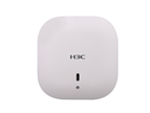
The existing WA5530-FIT description highlights tri-radio 802.11ac operation, eight streams and dense access. In a classroom or busy shared area, however, the number of APs should not be calculated from floor area alone. Concurrent clients, application demand, channel reuse and wired backhaul all affect the result.
| Design focus | Dense environment | Coverage-led environment |
|---|---|---|
| Primary constraint | Concurrent capacity and airtime | Signal reach and site geometry |
| Validation | Peak-load client and application tests | Coverage, roaming and edge performance |
| Common mistake | Assuming a high stream count removes contention | Assuming one AP can serve every obstruction |
Test synchronized login, content download and lesson transitions with a representative class, rather than relying on a single-client speed test.
Only after the target AP, controller and release combination is confirmed as supported. Preserve a rollback plan for any change.
Evidence boundary: Final AP density and performance must come from the project survey and tests; this page does not promise a fixed coverage radius or client count.
Use the H3C wireless catalog for model screening and the buyer guide for a PoC request.
Confirm model, interface type, rate, power, airflow and software version before ordering.
Check the host server, switch fabric, firmware, slot, optics or cable and supported operating mode before ordering.
Share quantity, topology, deployment window, delivery region and replacement requirements for a practical recommendation.
Validate the representative host, peer device, driver, firmware and link media before a wider rollout.
Previous:WA4620i-ACN-FIT
Next:WA6320-D-FIT

 WeChat
 Inquiry
 Profile
Company Profile