
Specifications
Confirm model, interface type, rate, power, airflow and software version before ordering.
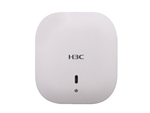
The existing WA5530-FIT material describes a tri-radio 802.11ac FIT access point with eight spatial streams across the device. It identifies dense user access and digital-classroom use as typical scenarios. Those characteristics make it a capacity-oriented candidate, but they do not replace a site survey or controller compatibility check.
| Area | What to verify |
|---|---|
| Radio plan | Bands, channel reuse, transmit power and co-channel interference |
| Clients | Supported standards, concurrent-device profile, roaming and application mix |
| Wired network | AP uplink, VLANs, authentication, aggregation capacity and controller reachability |
| Power | Required PoE standard, switch power budget and cable length |
| Operations | Controller model, software release, licenses, monitoring and rollback process |
Compare usable radio capacity, client mix, controller support, wired uplink and power demand under the same site assumptions. A larger stream count does not by itself guarantee better user experience if channels, backhaul or client capabilities become the limiting factor.
No. The result depends on client capabilities, channel planning, wired backhaul and local interference. Validate the design in the target environment.
This page does not contain enough model- and software-specific evidence to confirm an independent operating mode. Check the target release and configuration guide.
Evidence boundary: The statements above reflect the characteristics retained in the existing page. Exact radio, Ethernet and power values should be confirmed from the matching model documentation.
Review more H3C wireless devices or prepare controller and PoE details with the wireless procurement checklist.
Confirm model, interface type, rate, power, airflow and software version before ordering.
Check the host server, switch fabric, firmware, slot, optics or cable and supported operating mode before ordering.
Share quantity, topology, deployment window, delivery region and replacement requirements for a practical recommendation.
Validate the representative host, peer device, driver, firmware and link media before a wider rollout.
Start with the required speed, interface, host platform and deployment role before comparing nearby models.
Confirm firmware, drivers, optics or cables, peer-device interoperability and the workload that matters to the project.
Provide the model, quantity, topology, target equipment, delivery region and required date so the next step is clear.
H3C WA5530-FIT Access Point: Tri-Radio 802.11ac for High Density can be evaluated for H3C Wireless APs and Controllers projects, capacity expansion and replacement planning.
Confirm the host or switch model, slot, port mode, speed, firmware, operating system and the required cable or optic.
Use the intended peer device and workload to check link negotiation, driver or firmware behavior, throughput and stability.
Match the model to the required interface, rate, topology, software boundary, lifecycle and delivery schedule.
Compare the server or switch, port mode, speed, media, firmware and deployment environment; use a PoC when any boundary is uncertain.
Send the target model, quantity, existing equipment, link speed, distance, delivery date and replacement tolerance.
Previous:WA2620E-WiNet-FIT
Next:EWP-WA3610i-GN-FIT

 WeChat
 Inquiry
WeChat
WeChat Inquiry
 Profile
Company Profile
Profile
Company Profile