
Specifications
Confirm model, interface type, rate, power, airflow and software version before ordering.
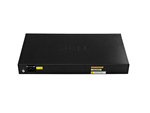
F100-S-G2 Firewalls is retained as a model or product topic. The available English source text is not reliable enough for model-level claims, so this revision separates practical guidance from facts that still require current evidence.
When assessing F100-S-G2 Firewalls, size interfaces, traffic, sessions, enabled inspection, policy complexity, logging, topology and failure impact together.
This revision of F100-S-G2 Firewalls does not promise price, stock, lead time, authorization, certification, warranty, lifecycle status or universal compatibility. Confirm current exact-model documents and dated test results.
Build a dated evidence pack for F100-S-G2 Firewalls that records the complete identifier, source documents, configuration assumptions, dependencies, test method, results and unresolved questions before approval.
Confirm model, interface type, rate, power, airflow and software version before ordering.
Check the host server, switch fabric, firmware, slot, optics or cable and supported operating mode before ordering.
Share quantity, topology, deployment window, delivery region and replacement requirements for a practical recommendation.
Validate the representative host, peer device, driver, firmware and link media before a wider rollout.
Start with the required speed, interface, host platform and deployment role before comparing nearby models.
Confirm firmware, drivers, optics or cables, peer-device interoperability and the workload that matters to the project.
Provide the model, quantity, topology, target equipment, delivery region and required date so the next step is clear.
F100-S-G2 Firewalls can be evaluated for H3C Firewalls projects, capacity expansion and replacement planning.
Confirm the host or switch model, slot, port mode, speed, firmware, operating system and the required cable or optic.
Use the intended peer device and workload to check link negotiation, driver or firmware behavior, throughput and stability.
Match the model to the required interface, rate, topology, software boundary, lifecycle and delivery schedule.
Compare the server or switch, port mode, speed, media, firmware and deployment environment; use a PoC when any boundary is uncertain.
Send the target model, quantity, existing equipment, link speed, distance, delivery date and replacement tolerance.
Previous:F100-A-G2 Firewalls
Next:F1000-C-G2Firewalls

 WeChat
 Inquiry
WeChat
WeChat Inquiry
 Profile
Company Profile
Profile
Company Profile